Fraud and Investigations
Reading a Body Shop Estimate Line by Line
How a car repair estimate is built, why quotes differ, which lines investigators check first and what evidence to keep before and after a repair.
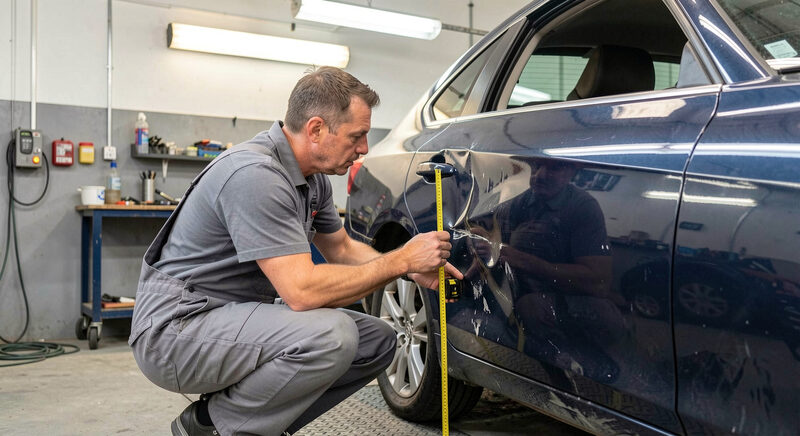
A body shop estimate is read by splitting it into three kinds of cost: labour hours, parts and materials, and paint. Each line should match something visible on the car or in the photographs of the damage. A line that cannot be matched to a dent, a crack or a panel is the line an insurer, a buyer or an investigator asks about first.
What does a repair estimate actually contain?
An estimate is a priced plan for a repair that has not happened yet. Most are built from the same blocks, whatever the country. Bodywork labour covers the hours to remove, straighten and refit a panel. Paint labour covers preparation, priming, colour application and varnish. Parts are the new or second-hand components that replace anything too damaged to save. Materials cover the consumables used up in the job, such as abrasives, masking, filler and paint itself.
Labour is quoted in hours at a stated hourly rate, and the number of hours usually comes from a reference time for each operation. That makes the labour line the easiest to compare between two shops: the same operation on the same panel should land in a similar range of hours, even when the hourly rates differ. Parts are harder to compare, because the choice between a new original part, an equivalent part and a used one changes the price and sometimes the warranty.
The estimate also records the vehicle, its registration and mileage, the date, and the damage the author believes the vehicle has. That last item is what ties the document to evidence. A reader who finds repair lines for the left rear door on a car whose photographs show only a front bumper scratch has found the mismatch that matters.
Why does the same damage get different quotes?
Differences between quotes are normal and are not in themselves a sign of fraud. A shop that proposes to repair a bumper and a shop that proposes to replace it are describing two different jobs, with different parts costs and different labour. A shop that has seen the car in person can find hidden damage behind a panel that a photograph does not show. A shop that quotes only from photographs, as many now do for a first figure, is giving an estimate that the inspection can still change.
For a driver in France comparing a first figure, a body shop in La Penne-sur-Huveaune near Marseille, Carrosserie Huveaune, states that it gives a free quote built from the photographs the owner sends, itemised line by line, and that the document can be read by the insurer. A second estimate of that kind is useful mainly as a yardstick: it shows whether the first one sits in the same range and whether the same operations are listed.
Three questions make quotes comparable. Is the same panel being repaired or replaced? Is the paint work limited to the damaged area or extended to neighbouring panels to match the colour? Are consumables billed as a percentage of labour, or as a flat sum? Put in a table with one column per shop, those three answers explain most of the gap between two totals.
Which lines do investigators check first?
Insurance fraud on repairs rarely involves an invented accident. It more often involves a real, small claim that grows on the way to the invoice. The patterns below are the ones a claims reviewer or an investigator looks for, and they are the same ones a careful car owner can look for.
- Repairs that were billed and not done. The invoice lists a replaced part, but the original part is still on the car, or the old part number appears on the vehicle after the repair.
- Duplicated lines. The same operation appears twice under two different names, such as "refit door" and "door removal and refit".
- Damage added after the fact. The estimate covers panels that do not appear in the first photographs or in the accident report.
- Hours that do not match the operation. A paint job for a small area priced at the hours of a full panel respray.
- Parts priced as new but supplied as used. The gap between the two is the margin, and only the part itself can show which was fitted.
The method is the one described in the guide to internal and external fraud investigation: start from the first record, compare every later document with it, and list each difference with its source. The same discipline appears in a hospital invoice, where each line is tested against the treatment record, as set out in the piece on reading a detailed hospital bill line by line.
What evidence should exist before the quote is signed?
The strongest protection for the owner and the insurer is a dated record of the damage made before any repair begins. Photographs are the core of it. They show their value only when they are taken in a consistent way and kept unedited.
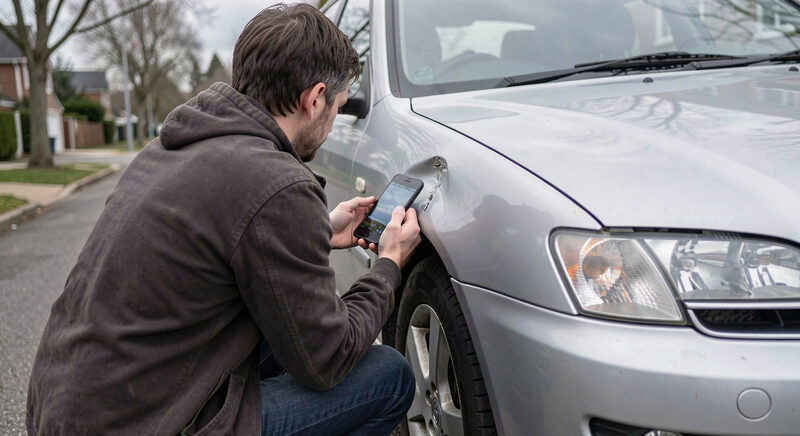
A workable set has four views. One shows the whole side of the car so that the damaged panel can be placed. One shows the point of impact from the front, and one from an angle that makes a dent readable in the reflection. A fourth shows the edges of the damage, where cracked paint or a split in the varnish shows whether the surface layer is broken. Daylight without harsh glare helps, and the original files, with their date and time, should be kept rather than screenshots of them.
Alongside the photographs, a short written note records what happened, when and where, and who else was involved. If another party is involved, the amicable accident report or its equivalent is part of the same file. A reviewer reading it later can follow a chain from event to photograph to estimate to invoice, which is the shape of the file described in the article on litigation support and the evidence file.
How should the final invoice be checked against the estimate?
After the repair, the invoice should be checked against the estimate, and the estimate against the photographs. Three comparisons cover most of the risk. The first is scope: every operation on the invoice should appear on the estimate or in a documented revision. The second is price: any increase should be explained in writing, for example by damage found once a panel was removed. The third is the vehicle: the repaired area should look as the invoice says it does, in colour match, panel gaps and finish.
If the repair was paid for by an insurer, the insurer may ask for the invoice and for the replaced parts, or may have an expert inspect the car. Keeping the old parts until the claim is closed is cheap and removes any doubt about whether a replacement took place. Owners who have complained about a repair are in a stronger position when the photographs, the estimate and the invoice already sit together in one folder.
Organisations that work against claims fraud publish material on how it is committed and detected. The Coalition Against Insurance Fraud is one source of such reporting, and it shows that inflated repair claims are an ordinary and recurring category rather than an exotic one.