Due Diligence
Due Diligence
How companies verify a counterparty before a deal: reputation, ownership, records and the questions that decide whether to proceed.
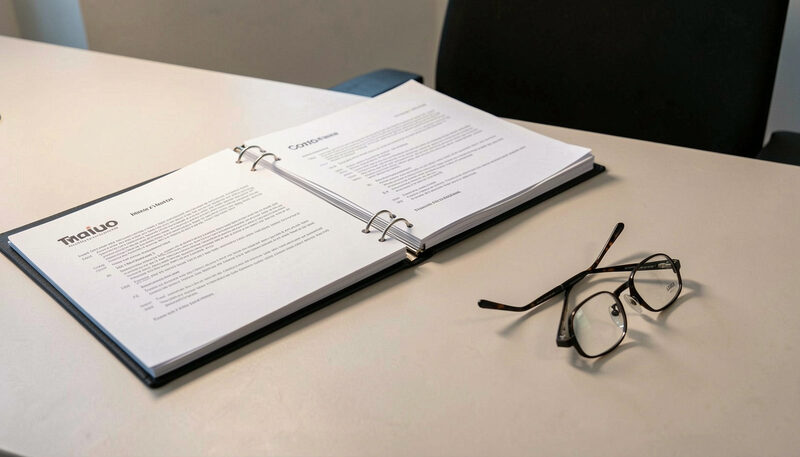
Due diligence is the work a company does before it commits money, reputation or a long contract to someone else. It is not a single check but a sequence of questions asked in a deliberate order, each answer deciding whether the next one is worth asking. A buyer, a lender, a board or a regulated firm commissions it to reduce the chance of a surprise that a signature would make expensive to undo.
What due diligence is meant to answer
The short version is one question: are things as they have been presented? A company being acquired may have a management team whose public record does not match the account given in the sale documents. A new customer may be an ordinary trading partner or a vehicle for moving money that is not its own. A supplier may sit behind a chain of owners that no one has disclosed. Due diligence tests the presentation against records that exist independently of the person making the presentation.
The scope follows the transaction. An acquisition of a whole business looks at ownership, contracts, liabilities, litigation and employees. A distribution agreement may need only a check on the counterparty and its owners. A loan needs the borrower, the guarantors and the security. The first useful step in any engagement is to write down what decision the check has to support, because that decides what is in scope and what is not.
The order of the checks
Most corporate checks begin with public records because they are fast, cheap and hard to dispute. Company registers show incorporation, directors, filings, accounts and changes of name or address. Court records show litigation, judgments and insolvency. Land and security registers show property and charges. Registers of beneficial ownership, where a country maintains one, show who stands behind a company even when the legal owner is another company.
Records alone rarely settle a question. They are the skeleton, and the rest of the work puts flesh on it. A director who resigned the day before a filing is a fact that matters only when it is read with the filing itself. A company with clean accounts and a director who appears in three failed businesses tells a different story than the accounts alone. The guide to what a corporate due diligence check covers sets out the full scope, from ownership to litigation history, and how the findings are weighed.
Ownership is where most surprises hide
Legal ownership and real control are not the same thing. A company can be owned by a trust, a foundation, a second company in another jurisdiction or a nominee who holds shares for someone else. Each layer makes the true owner harder to see. Beneficial ownership rules exist precisely because that gap was used to hide proceeds of crime, sanctions evasion and tax. Where a register is public, it is the first place to look; where it is not, ownership has to be established through filings, corporate documents and, sometimes, on the ground.
Reputation, media and the record beyond the register
A register does not record a reputation. A reputation audit reads the public record more widely: press coverage, court reporting, regulatory notices, professional directories and public roles. It looks for patterns rather than a single article, and it is careful about the difference between an allegation and a finding. The reputation audit explained before a deal covers what public sources can and cannot show, and why a negative search result is a question to resolve rather than an answer in itself.
Where due diligence ends and an investigation begins
Due diligence is preventive. It is commissioned before a decision, from public and licensed sources, and its product is a written view of risk. An investigation is reactive. It starts from a suspicion or an incident, uses evidence control and interviews, and its product is a file that can support a disciplinary process, a claim or a prosecution. The two share tools but not purpose, and confusing them creates problems: a due diligence report is not evidence, and an investigation that begins as a routine check may lose the very protection the client wanted. The section on fraud and corporate investigations describes the investigative path from the first alert to the final report.
Red flags and how they are handled
A red flag is not a conclusion. It is a fact that does not fit and that a reasonable reader would want explained. Common ones include an owner who cannot be identified, a payment routed through an unrelated country, a director shared with a sanctioned company, a business address that turns out to be a mailbox, or accounts that change auditor every year. The value of a check is in the handling: each flag is recorded, given a source, tested against other records, and either resolved or left open with its consequence stated plainly. A report that lists flags without resolving them is a list, not a judgement.
What a finished check looks like
A finished piece of due diligence is short enough to be read by the person who has to decide. It states the question, the sources used and their dates, the findings, the open questions and the residual risk that remains after the work. It separates what is known from what is assumed. It names the limits: a check on a private company in a country without a public register will always know less than one on a listed company in a country that publishes filings. The point is not to remove all risk, which is impossible, but to make the risk visible before it is taken.
The two guides in this section
The section opens with two pieces. The first explains the scope and order of a corporate due diligence check, from the first register search to the final view of risk. The second covers the reputation audit, the part of the work that reads the public record for the things a register will never show.

Due Diligence
What Corporate Due Diligence Covers
What a corporate due diligence check actually covers, from company records and ownership to litigation history and reputation, and how the findings are used.
Registers, filings and ownership: the scope of a check, step by step.

Due Diligence
The Reputation Audit Before a Deal
How a reputation audit works before a deal: media and court records, public roles, political exposure and the limits of what public sources can show.
Media, court records and public roles, and the limits of each.