Fraud and Investigations
Asset Tracing: Following the Money
How asset tracing follows money through banks, companies and property: public registers, corporate filings, court orders and the limits of each method.
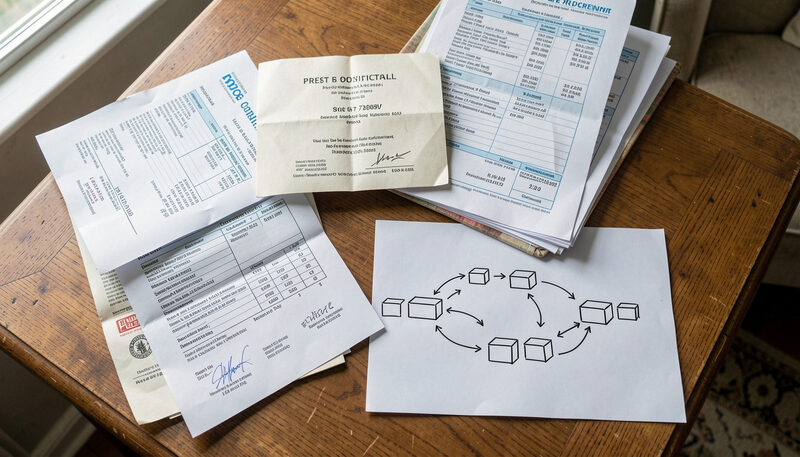
Asset tracing is the work of finding money and property that someone has moved or hidden. It is commissioned when a loss has been established and recovery depends on knowing where the value now sits: in which bank, behind which company, in whose name, in which country. The work follows a trail rather than a person, and its success depends on how much of that trail left a public trace.
The question tracing is built to answer
Tracing starts from a fact and a goal. The fact is a transfer: money left an account, a property changed hands, a company was sold. The goal is to find the current location of the value, and to do so in a way that can support a claim, an enforcement action or a freezing order. That second requirement shapes everything. A tracing exercise that finds an asset through irregular means may be worthless, because the finding cannot be used. The discipline is to build a chain of evidence from documents that a court will accept.
Following the money through the banking system
The first step is usually the banking record, and the first obstacle is access. Bank information is confidential, and a private party cannot simply ask for it. In a formal dispute, a court can order disclosure, and in some jurisdictions a freezing or disclosure order can be obtained quickly where there is a risk that assets will be moved. Where no such order is available, the trace has to work from the outside, using payment references, correspondence, invoices and any records the claimant already holds. Knowing which route is open is a legal question as much as an investigative one, and the two are planned together.
Companies, and the layers built to obscure
Money that leaves a bank account rarely stops. It is moved into a company, which is owned by another company, which is registered in a third country, and the chain of ownership is designed so that the end of it is hard to reach. Tracing works through those layers using company registers, annual filings, shareholder records and the documents generated by the companies themselves. Beneficial ownership registers, where they exist and are accessible, shorten the work considerably. Where they do not, ownership is reconstructed from filings, from addresses shared with other companies, from directors who appear repeatedly, and from the timing of incorporations and transfers. The section on due diligence describes how ownership is checked before a deal; tracing applies the same tools to money that has already gone.
Company formation data is itself a source. Incorporation dates that cluster around a transfer, a company registered at an address used by hundreds of others, or a director who appears in a series of otherwise unrelated entities are all patterns that a trace is built to notice.
Land, property and the registers that record it
Property is harder to hide than money, because most countries keep a register of who owns land and who holds a charge over it. A property register can show a purchase, a mortgage, a transfer and the identity of the buyer, even when the buyer is a company. Tracing uses these registers to find value that has been converted into real estate, and to establish the sequence of transactions around a disputed transfer. Where the register is not public, the same information may be reachable through the documents produced in a transaction or through a court order.
Trusts, foundations and other arrangements
Trusts and foundations are legitimate structures that also happen to be effective at separating legal title from real benefit. A trust may hold assets for beneficiaries who are not named in any public record. A foundation may own a company whose shares are held by a nominee. These arrangements are not automatically a sign of wrongdoing, and treating them as such is both inaccurate and counterproductive. Tracing them means establishing who has the power to appoint and remove trustees or directors, who benefits, and how the arrangement was funded, which usually requires documents rather than registers.
Digital traces and open sources
A surprising amount of tracing now begins online. Corporate filings are published, court documents are increasingly available, leaked and journalistic databases map offshore structures, and public records of professional roles, addresses and disputes can connect entities that look unrelated. Open-source work is fast and cheap, and it is also easy to get wrong, because the same name can belong to several people and a record can be out of date. Verification, not discovery, is the scarce skill.
Where tracing stops
Tracing has a boundary, and a good report names it. Some jurisdictions publish almost nothing about companies. Some assets are held in forms that leave no public trace at all. Some records are destroyed, and some are simply never created. When the trail runs out, the honest conclusion is that the value could not be located from available sources, together with what would be needed to go further, such as a disclosure order or access to a specific record. Claiming more than the evidence supports turns a useful finding into a liability.
How tracing connects to the wider case
Asset tracing rarely stands alone. It supports a claim prepared by litigation support, it may follow a fraud investigation, and its findings feed the recovery strategy that a lawyer will argue. In regulated settings it also touches the anti-money-laundering duties that a firm owes when it handles money it does not own.
Where to read about offshore structures
The International Consortium of Investigative Journalists maintains a public database of companies, trusts and foundations drawn from large sets of leaked records, searchable by name and jurisdiction. It is a secondary source and its entries reflect the documents it holds, not a finding of wrongdoing. The address is offshoreleaks.icij.org.